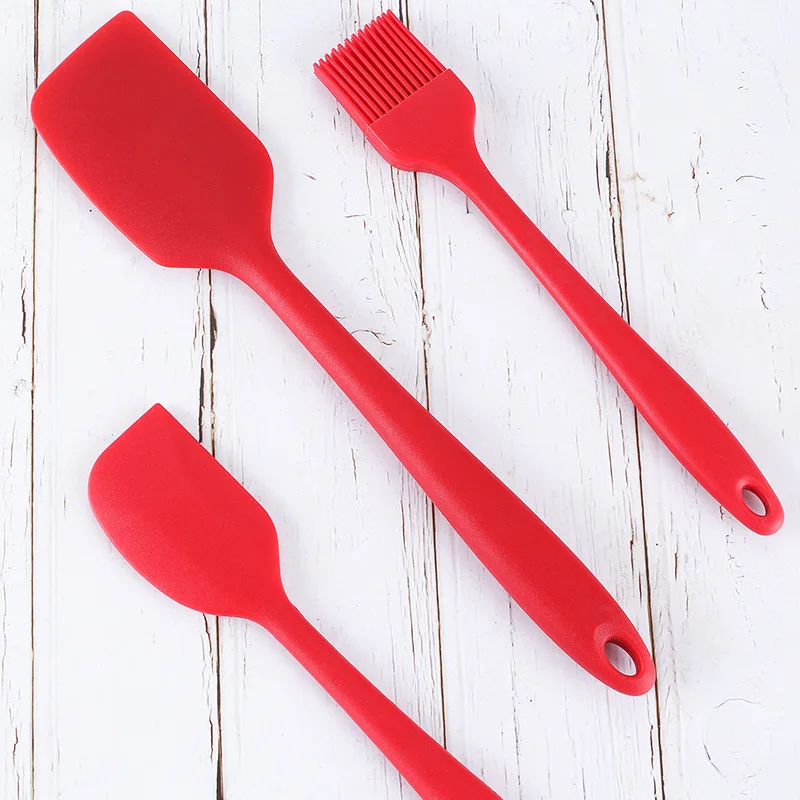
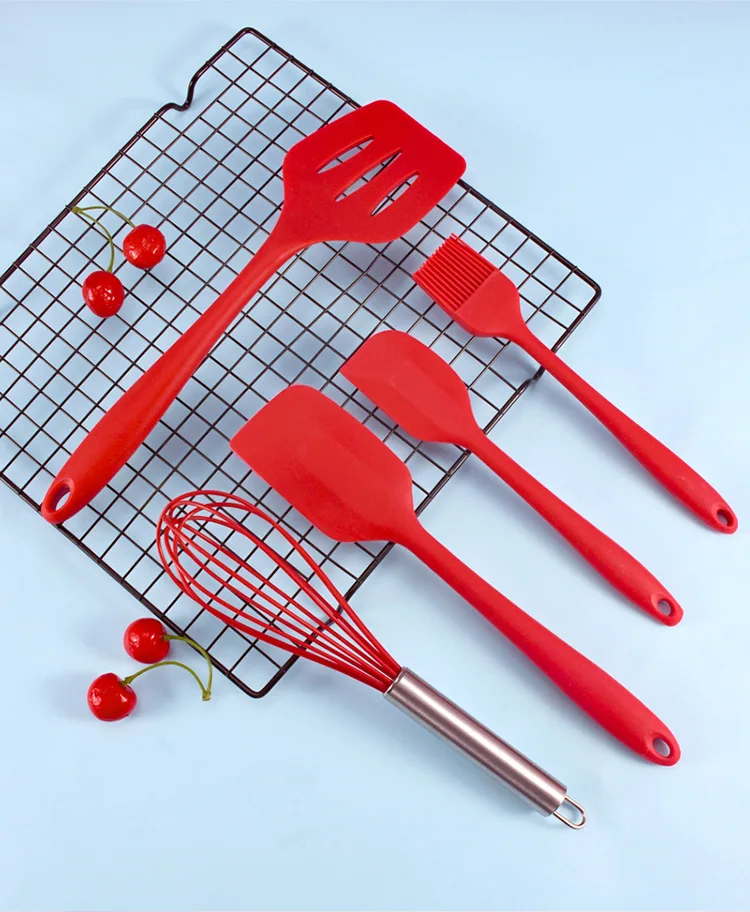
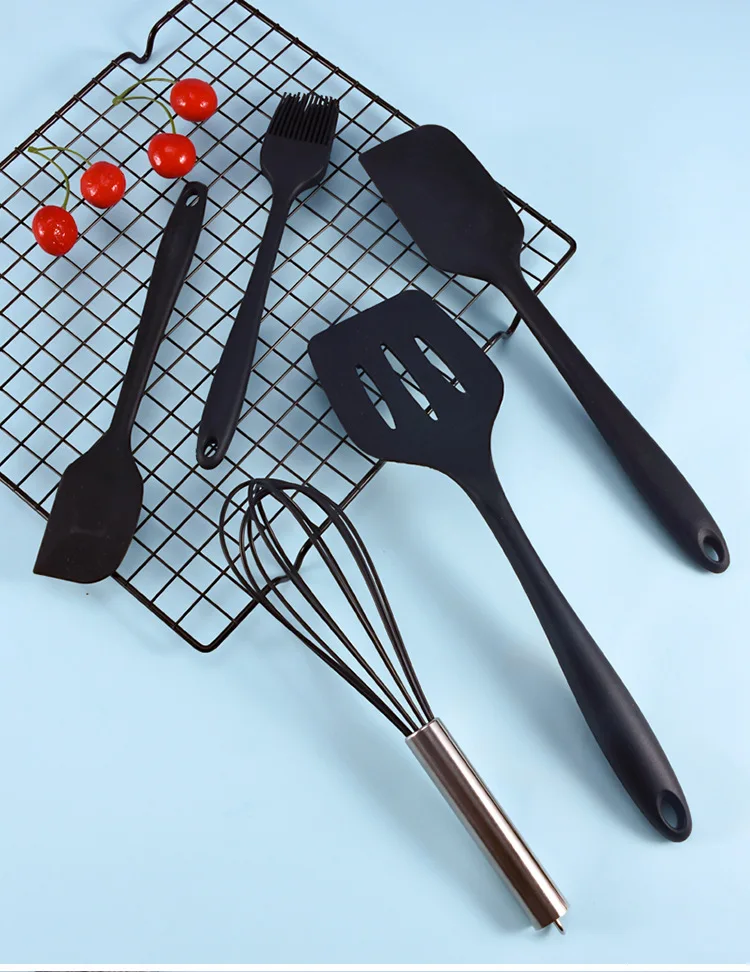
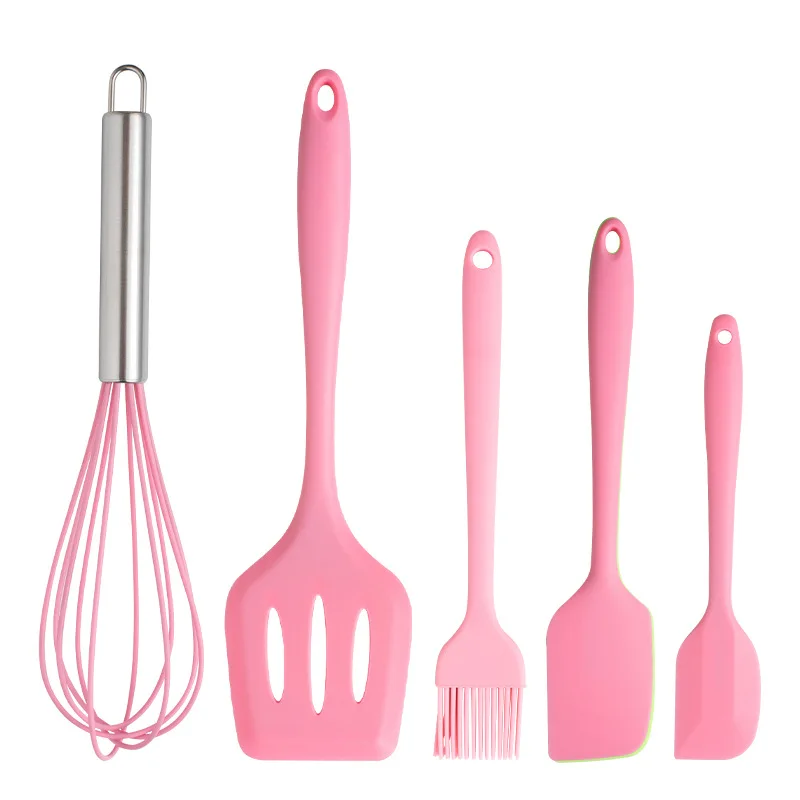
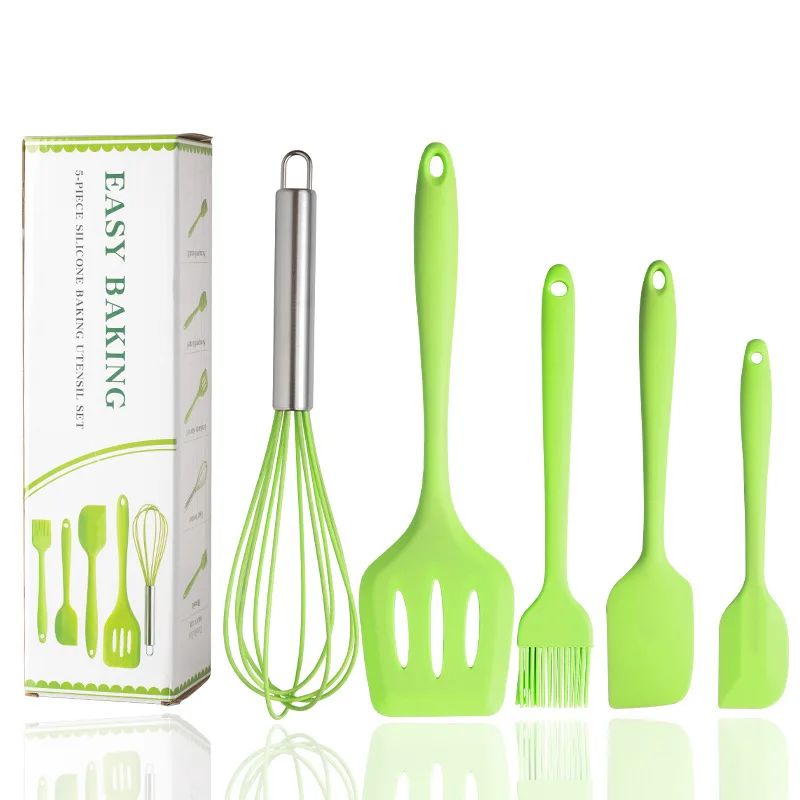
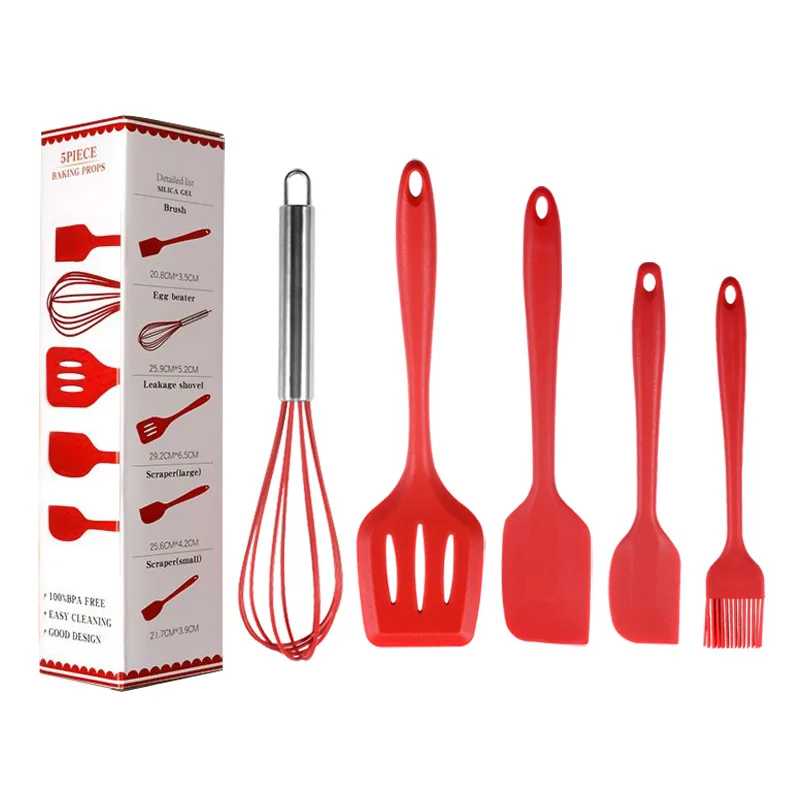
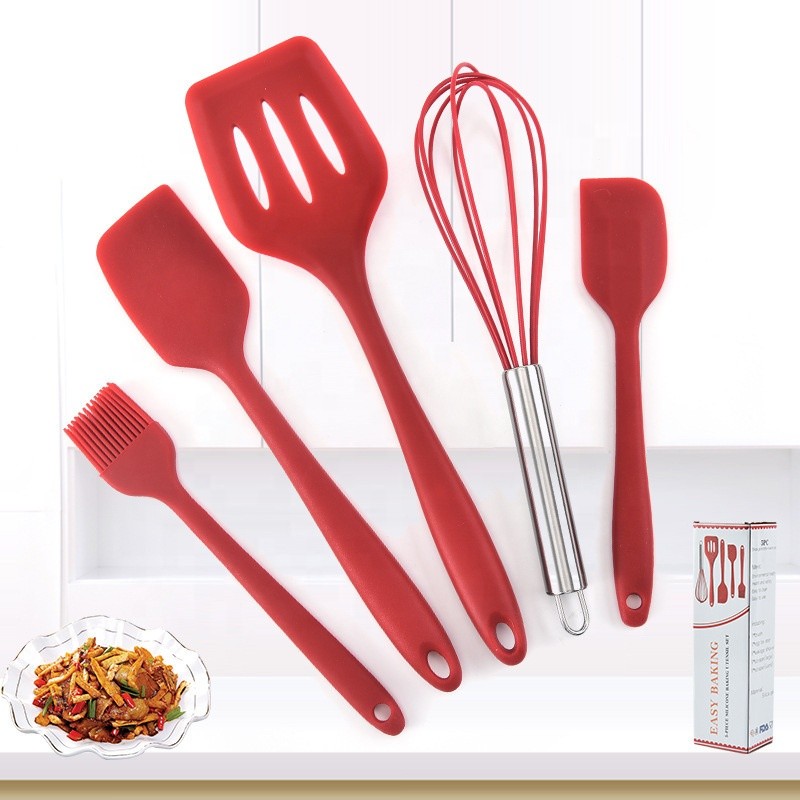
silicone kitchen utensil set,
best silicone cooking utensils
Silicones have become enormously popular in recent years and are marketed as safe replacements for traditional plastics. You can find the material in baby bottle nipples, utensils, toys, mugs, food containers, cosmetics, various personal care products, etc. In more industrial contexts, silicone is commonly used for insulation, sealants, adhesives, lubricants, gaskets, filters, medical applications (e.g., tubing), and casing for electrical components.
Are silicones plastic?
Silicones—or siloxanes, as they are also known—are something of a hybrid between synthetic rubbers and synthetic plastic polymers. They can take on different forms and be used to make malleable rubberlike items, hard plasticlike resins, and thick spreadable fluids.
Silicones have plasticlike properties: flexibility, malleability, clarity, temperature resistance, and water resistance. Like plastic, they can be shaped or formed and softened or hardened into practically anything. Since they're easy to clean, nonstick, and nonstaining, they're popular for cookware and kitchen utensils, too.
So what is silicone exactly? And is it different from silicon?
Like any plastic polymer, silicones are synthetic and include a mix of chemical additives. The key differentiator from carbon-based plastics is that silicones have a backbone made of silicon. I know, confusing! It’s important to get the terminology right here, so let's dive in:
Silica:
When people say silicones are made of sand, they are not incorrect, though that’s too simplistic a description. Silica—or silicon dioxide—is what they are referring to. Silica is the raw material used to make silicone resins. Beach sand is practically pure silica, as is quartz.
Silicon:
This is the base element that makes up silica, but silicon is not generally found in nature in this elemental form. It is made by heating silica at very high temperatures with carbon in an industrial furnace.
Silicone (siloxane):
The silicone is then reacted with fossil fuel-derived hydrocarbons to create siloxane monomers that are bonded together into polymers to form the final silicone resin. The quality of these silicones can vary greatly depending on the level of purification. For example, the silicones used to make computer chips are highly purified.
Are silicones toxic?
While the research indicates that silicones are certainly very stable, they are not completely inert. In other words, there is a possibility of leaching. For example, one study tested the release of siloxanes from silicone nipples and bakeware into milk, baby formula, and a solution of alcohol and water. Nothing was released into the milk or formula after six hours, but after 72 hours in the alcohol solution, several siloxanes were detected. Siloxanes are considered potential endocrine disrupters, and some have been linked to cancers.
Many experts and authorities consider silicones to be nontoxic and safe for contact with food and drink. For example, Health Canada states: "There are no known health hazards associated with use of silicone cookware. Silicone rubber does not react with food or beverages, or produce any hazardous fumes."
While the scientific evidence is weak in pointing a smoking gun at silicones, the questions and uncertainty are there, so it’s worth keeping a close eye on them—especially given the growing concerns about endocrine-disrupting chemicals. Siloxanes are also present at detectable levels in land, air, and water, and given their durability, they tend to persist in the environment for a long time.
Recyclability of silicone.
Silicone poses an environmental threat because it is rarely recycled. Although silicone products can be collected by specialized recycling companies that will typically down-cycle it into oil used as lubricant for industrial machines, it is rarely accepted in municipal curbside recycling programs. Therefore, just like plastics, not only can silicone only be down-cycled, but most of it just ends up in landfills where it won't biodegrade for hundreds of years
Some tips for using silicone safely.
The silicone should be high quality, ideally "medical grade" but at least "food grade." (If the grade isn't listed, ask the company selling it.) The higher the quality, the lower the possibility of leaching chemicals.
You can test a silicone product for chemical fillers by pinching and twisting a flat surface of it to see if any white shows through. If you see white, a filler likely has been used because pure silicone should not change color at all. If it has fillers, the product may not be uniformly heat resistant and may impart an odor to food. But most importantly, you will have no idea what the filler is, and it may leach unknown chemicals into the food. For all you know, the filler may be a silicone of low quality or not silicone at all.
Bottle nipples and pacifiers should be safe, but best not to put them in the dishwasher, and if they get cloudy or worn out, replace them (ideally, they should be replaced every six to eight weeks). Natural rubber is another option, as long as your child does not have an allergy to natural rubber latex.
For cookware, glass, ceramic, and stainless-steel options are great alternatives to silicone (though silicones can be a safer alternative to nonstick cookware that may have perfluorinated chemicals).
Things like silicone oven mitts, utensils (spatulas, spoons), splatter guards, and potholders should be fine given the minimal amount of time they are in contact with food. But again, avoid them for direct food use where possible.
This piece was co-written by Jay Sinha.
Adapted from an excerpt from Life Without Plastic: The Practical Step-by-Step Guide to Avoiding Plastic To Keep Your Family and the Planet Healthy by Chantal Plamondon and Jay Sinha, with permission from the publisher.
And do you want to learn how feng shui can help you create a high-vibe home and set powerful intentions to manifest your dreams? This is feng shui the modern way - no superstitions, all good vibes. Click here to register for a free session with Dana that will give you 3 tips to transform your home today!